Solar & Battery Storage for Arizona Schools
Turn rooftops and parking areas into long-term energy assets—while reducing demand costs and strengthening resilience for critical school operations.
Why Schools Are a Strong Fit
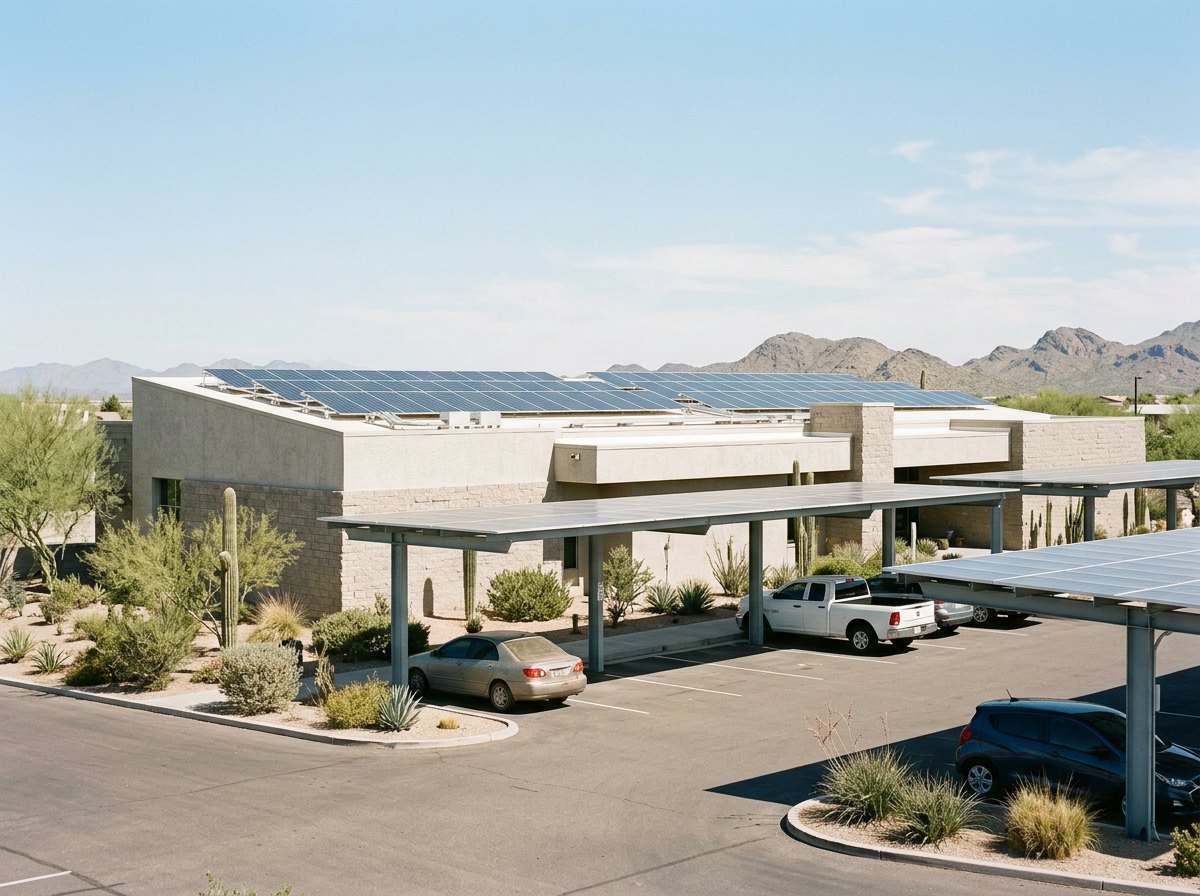
Arizona schools use substantial power during daylight hours. Rooftop solar and parking canopies can offset energy purchases, provide shaded parking, and create more predictable operating costs.
Battery storage can reduce demand peaks and support selected critical loads during outages—such as communications, refrigeration, security, IT, and emergency operations. Every proposal should also document degradation assumptions, warranty coverage, expected usable capacity, augmentation or replacement planning, recycling and decommissioning responsibility, and end-of-term financial exposure.


How the School Energy Assessment Works
1. Review 12 months of utility bills, interval data, and the school’s rate structure.
2. Identify rooftop, parking-canopy, and battery opportunities based on actual load.
3. Define critical loads, outage priorities, and realistic resilience goals.
4. Model lifecycle economics—including incentives, degradation, warranties, replacement, recycling, decommissioning, and end-of-term exposure.
5. Compare practical project approaches and qualified implementation partners before requesting final proposals.